


.svg)
What We're Seeing: AI Note Review Tool Provides Clinical Note Insights




Since rolling out AI powered note review, we've been checking standard of care documentation against payer policy on every case, and the same three gaps keep coming up: vascular assessment that's incomplete or missing, contraindications that were treated but never documented as resolved, and conservative care periods that don't fully hold together on paper. The encouraging part is that the care itself is almost always solid. It's the note that doesn't quite prove it, and that's a much easier fix.
Since rolling out AI powered note review, we've been comparing standard of care documentation against payer policy on every case that comes through. We have primarily noticed three gaps, across different practices, different wound types, and different payers.
None of these gaps are about the quality of the care. They're the missing elements that help to prove the care was necessary.
Advanced wound therapies sit behind a documentation gate. Before a payer covers a cellular or tissue based product, they want to see a specific story in the chart that proves the wound was properly assessed. It is imperative that the notes show conservative care was genuinely tried, and it didn’t work.
Before we get into the details of our findings, we want to be clear that the biggest gap we see in the notes is that they often get written for the next clinician, not for a reviewer who's never met the patient and is reading for compliance. Those are two very different readers, and the space between them is where denials tend to happen.
The Main Patterns We’ve Noticed
Vascular assessment inadequate or missing in 69% of flagged cases. This one's the biggest by a wide margin. It's typically that the check isn't somewhere a reviewer can find it. Mentioned in passing, buried in a prior visit, or done at an outside facility and never pulled into the chart. What holds up is an objective study with a date and a value, an ABI, toe pressure, Doppler waveforms, plus your interpretation. If the result is abnormal, you need to show what happened next.
Active or unresolved contraindication present in 56% of flagged cases. Infection is what we flag most often here. The issue usually is that the note documents the infection and then goes quiet. Treatment happens, the patient improves, therapy is applied weeks later, and the chart never says the infection resolved. A reviewer should be able to point to the line where it closed.
Minimum SOC duration not met present in 38% of flagged cases. Most policies want a defined stretch of documented conservative care, often four weeks, with proof the wound didn’t progress despite it. Two things trip this up. Timelines with holes, meaning weeks that skip or weeks without measurements. And charts where every piece is technically present, but no single note ties the four weeks together, so the viewer has to reassemble it.
In the vast majority of flagged cases, the care was solid. The documentation just didn't carry the proof forward in a form someone else could follow, and that's a much better problem to have. A study that was performed can be documented. An infection that resolved can be noted as resolved. Four weeks of care that actually happened can be summarized so it stands on its own.
We built the review to run before submission for exactly that reason. These fixes are close to free at the point of care and pretty expensive after a denial, in staff hours, in appeals, and in the delay to the patient.
Three habits that improve your notes
- Get a dated, objective perfusion value into the chart, and import the study if someone else performed it.
- Close every contraindication you open. If you documented an infection, document its resolution before advanced therapy starts.
- Write one summary note at the end of the conservative care period that pulls it all together. Dates, measurements, interventions, and the conclusion. One paragraph a reviewer can read on its own.
See a demo to learn even more!
These are the top three, but they aren't the only patterns we're tracking. If you want to learn about our other findings, schedule a demo and talk with our team.
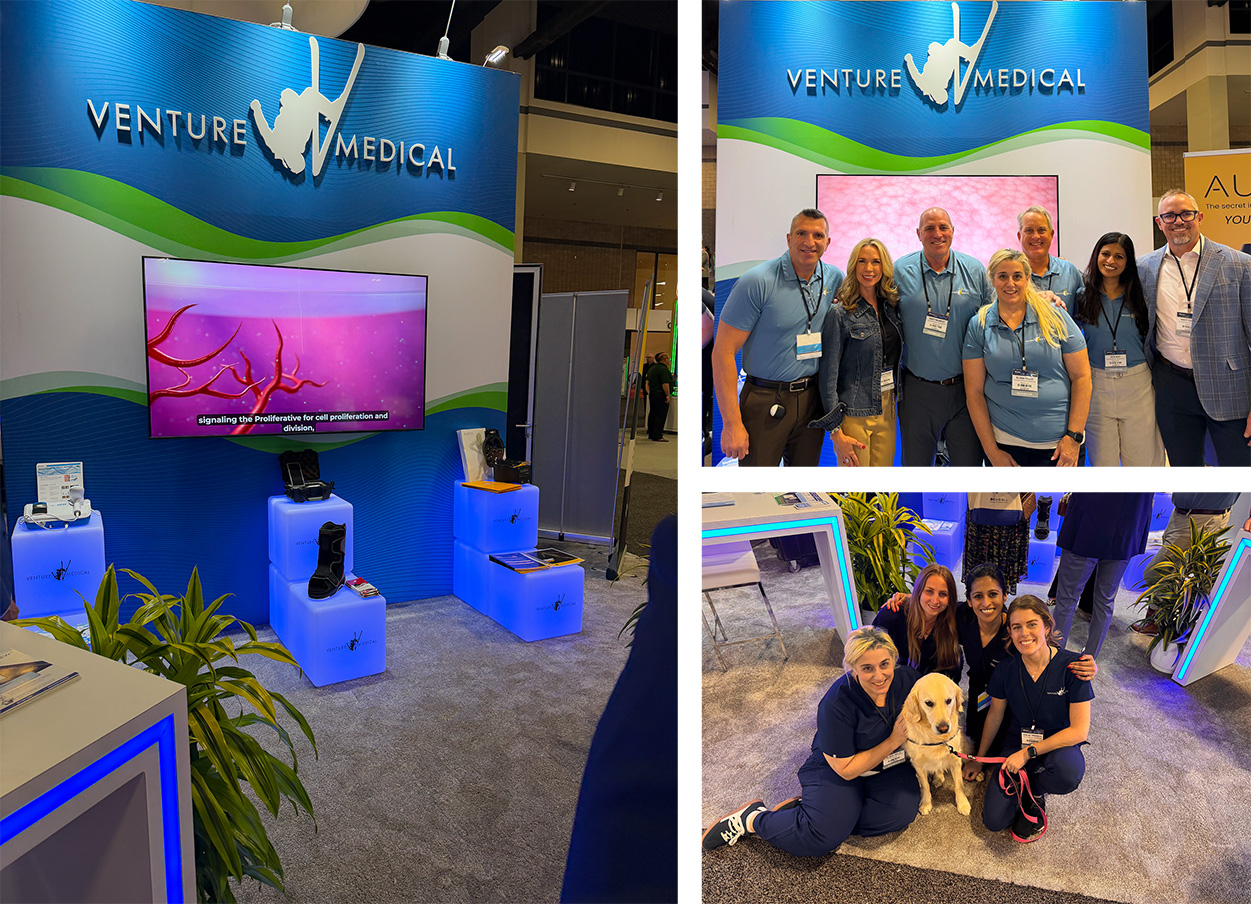
Want to see the tool in person? Swing by our booth at SAWC, October 15th-18thin Las Vegas. We'll show you what we're finding, run the tool live on real de-identified notes, and answer whatever's on your mind.


Categories
Venture Medical and Plasmacure Explore the Future of Cold Plasma at IPAWS
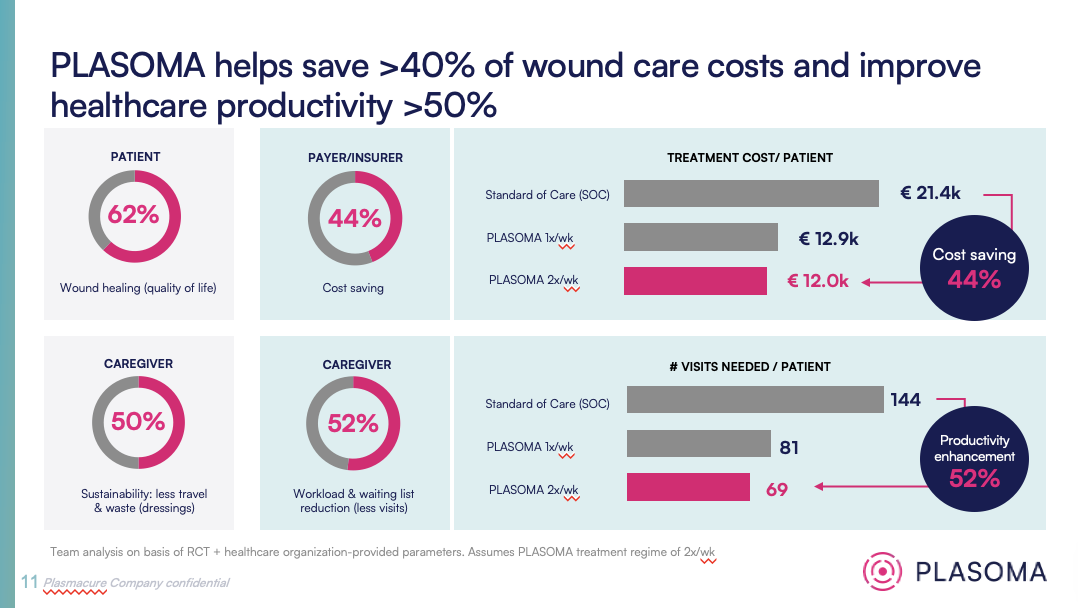
Venture Medical and Plasmacure recently came together at IPAWS in New Orleans to introduce wound care professionals to PLASOMA® and explore the potential role of cold atmospheric plasma in the future of advanced wound care in the United States.


Navigating WISeR: What Wound Care Providers Need to Know and How Venture Medical Can Help
The WISeR Model is here, and it's changing the way wound care providers submit and manage their Medicare claims. Learn what WISeR means for your practice, why accurate documentation is more critical than ever, and how Venture Medical is working hand-in-hand with providers to navigate the process with confidence.

How Venture Medical Is Helping Providers Build Practices That Last
Venture Medical remains committed to being a long-term partner to providers by giving them the strategies and tools they need to build sustainable, resilient practices for the long haul.Venture Medical's ongoing 2026 webinar series is focused on helping wound care providers build practices that can absorb disruption rather than react to it. Learn more about this webinar series and watch the recaps of the sessions you might have missed.

Why Defensible Documentation Is the Most Important Business Decision You Will Make in 2026
In an era of tightening payer scrutiny and rising audit activity, the practices that thrive will be the ones that treat documentation as a clinical and operational standard, not an afterthought. This blog breaks down what medical necessity really means, what "defensible" documentation looks like, and how the right workflows and technology can make excellence achievable every single day.



Missoula, Montana